Team Human: Tools Change. Builders Stay.
I wear two hats. As the founder of Oloodi, I build with AI every day, for our clients and in how we work. As a Google Developer Expert in Google Cloud (Cloud AI) and Dart & Flutter, I get new technology early, put it under real pressure, and share honestly what holds up.
Both hats see the same pace. New tools ship every week: Codex, Claude Code, whatever comes after. We test them, compare them, and decide what actually earns a place in how we work. That part is almost fun.
And yet, the deepest conviction behind the company is not technical.
A company is not a stack. It’s a group of humans deciding, every day, to build something together. The tools we use will be replaced. The architecture will be rewritten. What cannot be replaced is the energy of the team that builds it. That’s why, at Oloodi, we say we are team human.
Hiring is the hardest part, and the one I care about most
Almost everything in a company, you can figure out as you go. Hiring is the exception. It is still the hardest part of building a company, and, somewhat to my own surprise, the part of being a founder I enjoy most.
When the ground shifts every week, one more framework on a résumé is not what makes the difference. What matters is a team that can hold that uncertainty and still deliver: people who follow through on what we promise, who make the right calls for clients while the tools change underneath them, and who turn ideas into something real instead of just talking about them.
That’s what I look for now, above anything else: people who want to build, not just work.
Energy is the first metric
You can feel it before you can measure it.
Walk into a demo, a standup, a late-evening debugging session, and you know within minutes whether a project is alive. People interrupt each other with ideas instead of silence. Someone laughs at a bug instead of hiding it. The question “what if we tried…” comes up more often than “whose fault is…”
I’ve learned to treat that feeling as a leading indicator. Velocity charts and OKRs tell you what already happened. Energy tells you what’s about to happen. A team with high energy recovers from a bad sprint in days. A team without it can miss every deadline while technically doing everything right.
Energy compounds, like interest, like habits
A small win, celebrated, produces the appetite for the next one. A hard conversation, held with honesty, produces trust that makes the next one easier. A teammate who feels seen shows up differently tomorrow.
None of these moments look important on their own. That’s the trap. They compound quietly, in both directions: a culture of small recognitions builds momentum the same way a culture of small cynicisms destroys it.
Building a company taught me that my most important commits are not in the codebase. They are in those small, repeated deposits of energy.
Protecting the energy is the founder’s job
Roadmaps, funding, product, hiring: all of it matters. But if I had to reduce the founder’s role to one sentence, it would be this: make sure the team’s energy survives contact with reality.
Reality will test it. A launch that slips. A client who says no. A tool we bet on that gets overtaken a month later. The founder can’t prevent any of that. What the founder can do is decide what those moments mean: evidence that we’re not good enough, or information that makes the next attempt sharper.
That interpretation is contagious. Teams take their emotional cues from whoever holds the vision. Panic travels fast. So does calm.
We build with AI, and that’s exactly why we’re team human
There is a beautiful irony in running an AI company on this conviction.
We spend our days making software more capable, more autonomous, more trustworthy. And the more we do it, the clearer the lesson becomes: the value of the humans is not in the tasks the AI takes over. It’s in the energy no machine produces.
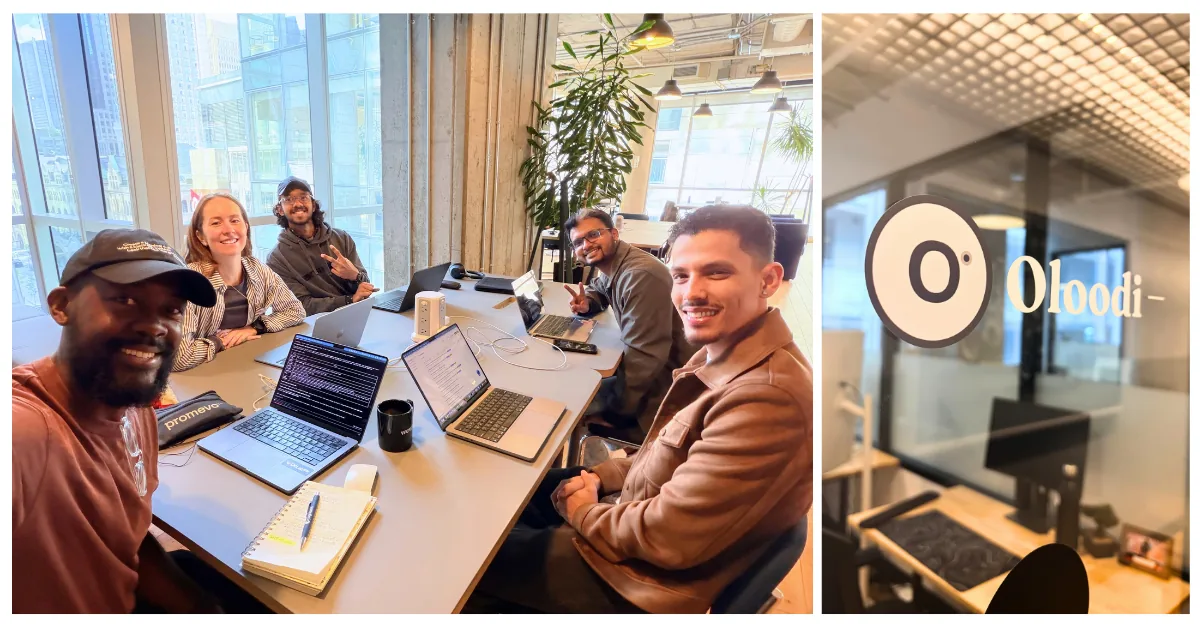
Every idea we turn into something real, every client problem we solve, comes from the Oloodi team around that table: testing, debugging, laughing over lunch, figuring it out together. (Our AI teammates couldn’t make it to the photo. Still working on that. 😁)
An agent can draft a document, verify a source, summarize a file. It cannot want the company to succeed. It cannot lift a discouraged teammate. It cannot look at a hard problem and decide, together, that it’s worth another try. Every technology we ship at Oloodi exists to amplify professionals, never to replace the thing that makes a team a team.
The team doesn’t stop at the office door
Being a GDE taught me the same lesson at a larger scale: communities run on energy too. Nobody is paid to show up at a meetup on a weeknight, answer a stranger’s question, or rehearse a talk until it’s clear. People come because the room gives something back.
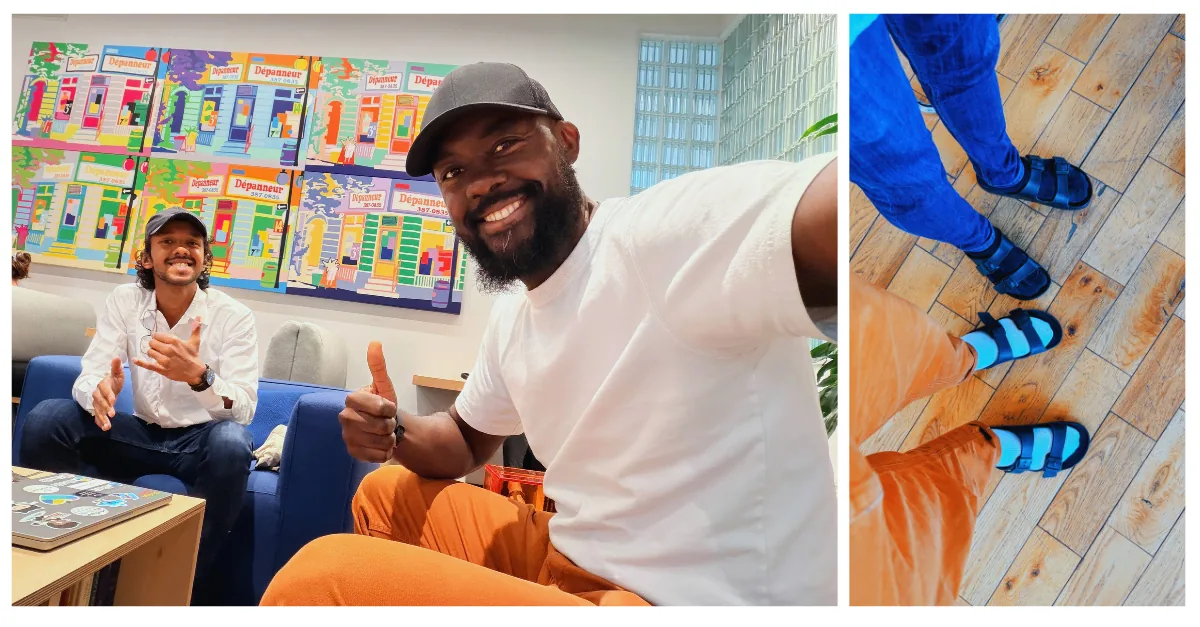
For us, that room is right here in Montreal. The GDG Montreal community and its DevFest are where the Oloodi team goes to learn, share what we’ve tested, and meet the people building next to us. It’s the same energy as around our table, just with more chairs.
What I’m taking home
- Hire people who build, not just work. Skills close gaps; energy and follow-through build the company.
- Let the tools change. Keep the team. Test everything; commit to people.
- Measure the mood, not just the metrics. The room tells you things the dashboard can’t.
- Deposit daily. Small wins, honest words, real recognition. They compound.
- Your calm is infrastructure. Treat it with the same seriousness as your uptime.
The stack will change. The team stays. 🚀